.svg)
Chatbot vs Live Chat 2026: Which is Better for Your Business?

"Should I get a chatbot or live chat?"
Wrong question.
That's like asking "should I hire a receptionist or a salesperson?" They do different jobs. The real question is: what problem are you actually trying to solve?
Let me break it down for you.
What A Live Chat Is
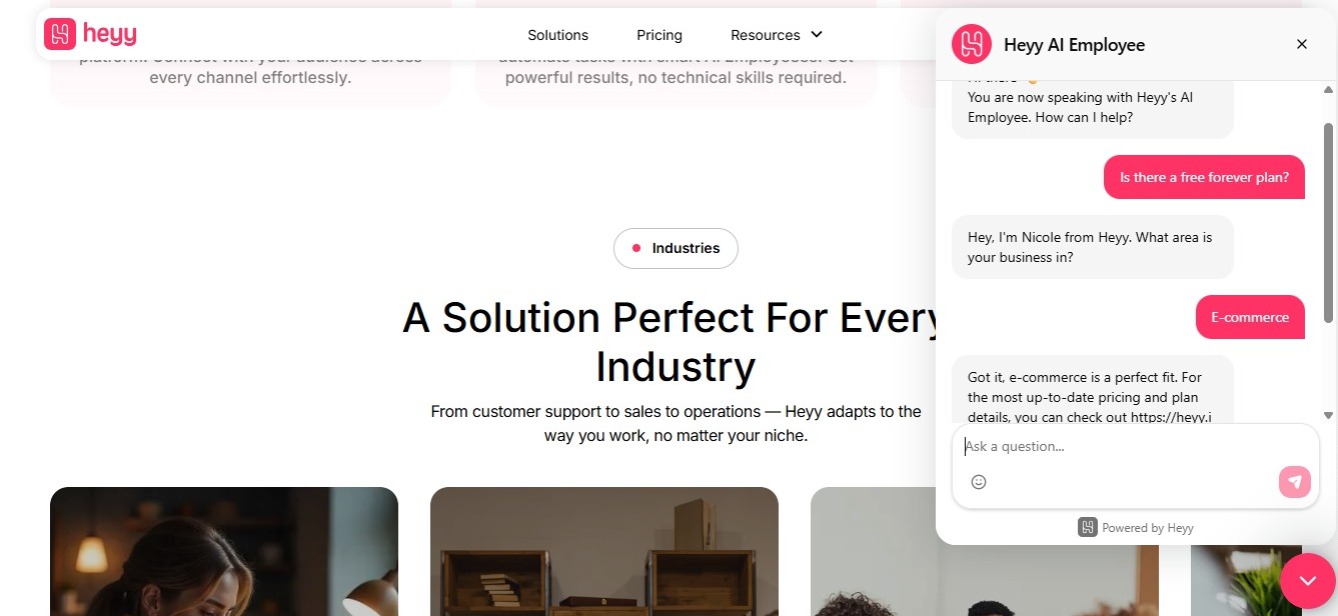
Live chat is exactly what it sounds like: people responding to website visitors in real-time through a chat widget.
Someone lands on your pricing page. A chat bubble pops up: "Questions about our plans?" They type their question. A human on your team responds. It's like having a salesperson standing next to every website visitor.
Live chat is needed when:
- Questions are complex or nuanced
- Customers need personalized recommendations
- You're selling high-ticket items or services
- Building trust and relationships matters
- Customers are frustrated and need empathy
Live chat sucks when:
- You get 500 repetitive questions daily
- You can't staff 24/7 coverage
- Response times stretch past 2-3 minutes
- Your team is overwhelmed with volume
What Chatbots Are
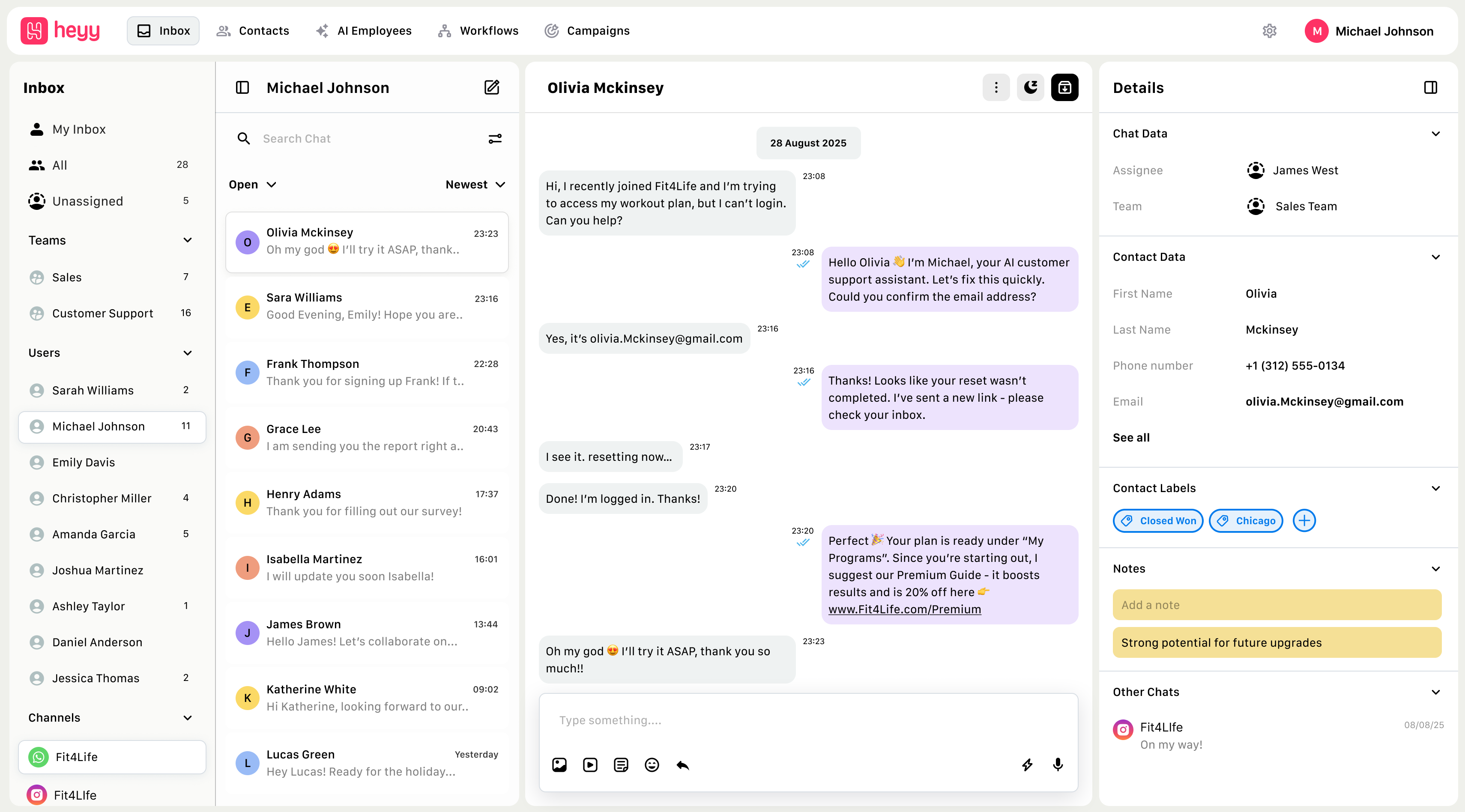
Chatbots are automated conversation systems that handle inquiries without human involvement. They can answer FAQs, qualify leads, book appointments, and route complex questions to humans.
Recent chatbots use AI to understand natural language. Someone asks "Do you deliver?" or "Can you ship to me?" and the bot recognizes both as the same question.
Chatbots are used when:
- Questions are predictable and repetitive
- You need 24/7 availability without hiring night shifts
- Volume is high (100+ inquiries daily)
- You want to qualify leads before sales involvement
- Speed matters more than personalization
Chatbots suck when:
- Questions require nuance and judgment
- Customers are upset and need human empathy
- Your product/service requires detailed consultation
- Context and relationship-building drive sales
The Difference
Live chat is reactive. Chatbots are proactive.
Live chat waits for customers to initiate. Then humans respond. It's excellent service but it's 100% dependent on human availability and speed.
Chatbots initiate conversations. "Hey! Looking at our Pro plan? Here's how it compares to Plus." They're always on, always fast, but limited to what they're programmed to handle.
The best systems use both. Chatbot handles initial contact and common questions. Human takes over when it gets complex. Customer gets instant response plus human touch when needed.
When You Need Live Chat Only
Some businesses should skip chatbots entirely and invest in live chat teams.
You need live chat (not chatbots) if:
1. You're selling complex B2B services
If you're selling $50,000 consulting packages, customers need to talk to humans. They have specific situations, unique challenges, custom requirements. A chatbot can't navigate that complexity.
2. Your customer base skews older
If your customers are 55+, many prefer talking to real people. They'll close the chat if they realize it's a bot. Just give them human support.
3. You're handling sensitive issues
Healthcare, legal services, financial advice, these need human judgment and empathy. Don't automate what requires care and discretion.
4. Your volume is manageable
If you're getting 20-50 chat inquiries daily, you don't need automation. One good support person can handle that and provide better experience than any bot.
5. Relationship-building drives your sales
Luxury brands, high-end services, personalized products, these sell on connection and trust. Automate too much and you lose your prospects.
When You Need Chatbots Only
Some businesses should go full automation with occasional human backup.
You need chatbots (not live chat) if:
1. You get hundreds of repetitive questions
"What are your hours?" "Do you ship internationally?" "How do I reset my password?" If 70% of inquiries are FAQ-level, automate them.
2. Your customers want immediate answers
Gen Z and millennials prefer self-service. They'd rather get instant bot answers than wait 5 minutes for a human. Speed wins.
3. You operate globally across time zones
Customers in Australia shouldn't wait until your U.S. team wakes up. Chatbots don't sleep, don't take breaks, and work every holiday.
4. You're bootstrapped with limited budget
One chatbot costs less than one part-time support person. If you're pre-revenue or early-stage, automation extends your runway.
5. You're selling simple products with clear answers
Physical products with straightforward features, standard policies, and predictable questions? Chatbots handle this perfectly.
When You Need Both
Most growing businesses land here: chatbots for efficiency, humans for excellence.
The hybrid model works like this:
Chatbot handles:
- Initial greeting and question gathering
- FAQs and simple inquiries (hours, shipping, returns)
- Lead qualification ("What's your budget?" "When do you need this?")
- After-hours coverage (captures info, promises follow-up)
- Appointment scheduling and booking
- Order status and tracking updates
Human handles:
- Complex product recommendations
- Pricing negotiations and custom quotes
- Frustrated or upset customers
- Technical troubleshooting beyond FAQs
- Relationship-building with VIP customers
- Closing high-value deals
The handoff is seamless. Bot says "Let me escalate this" Human picks up with full context of what the bot already discussed.
How to Set This Up
If you're going hybrid (which most businesses should), here's the plan:
Week 1: Audit Your Current Inquiries
Track every customer question for one week. Categorize them:
- Simple FAQs (bot can handle)
- Complex questions (need human)
- Urgent issues (fast human response)
- Lead qualification questions (bot ideal)
You'll probably find 60-70% are bot-appropriate.
Week 2: Choose Your Platform
For hybrid approach, you need a platform that does both effortlessly:
Heyy offers unified chatbot + live chat with smart routing. Bot handles common questions, humans see full context when they take over. Starting at $49/month.
Intercom is solid for SaaS companies. Strong automation plus team inbox. Starts at $39/month but scales expensive.
Zendesk handles enterprise volume. Robust but complex. Worth it if you're doing 5,000+ monthly conversations.
Tidio is budget-friendly for small businesses. Basic chatbot plus live chat. Free tier available, paid from $29/month.
Week 3: Build Your Chatbot Flows
Start with your top 10 most common questions. Create conversational responses:
Bad: "For shipping information, visit our FAQ page."
Good: "We ship to most countries! Where are you located? I can check if we deliver there."
Make it conversational. Make it helpful. Make the human handoff obvious.
Week 4: Train Your Team
Your support team needs to understand:
- What the chatbot handles
- When they'll get pulled in
- How to see the chatbot conversation history
- How to improve the bot based on recurring issues
Don't just turn it on and hope your team figures it out.
Industry-Specific Recommendations
E-commerce: Start with chatbot for FAQs and order tracking. Add human support for complex product questions and complaints.
SaaS: Hybrid. Bot for basic troubleshooting and account questions. Humans for technical issues and sales.
Professional Services: Live chat priority. Supplement with after-hours chatbot that captures info and promises callback.
Local Businesses: Simple chatbot for hours, location, booking. Humans for specific service questions.
Healthcare: Primarily live chat for compliance and sensitivity. Chatbot only for appointment scheduling and basic info.
Stop asking "chatbot or live chat?" Start asking "what problems am I solving?"
If your problem is availability, get a chatbot.
If your problem is personalization, get live chat.
If your problem is both (like most businesses), get hybrid.
The businesses winning aren't the ones with the fanciest AI. They're the ones matching the right tool to the actual problem.
Try Heyy Today and see how chatbot + live chat work together to boost client retention and conversions. Smart automation for common questions, instant human handoff when it matters. Connect Instagram, WhatsApp, Facebook, and your website into one intelligent inbox.
Your customers get instant answers. Your team handles only what needs human touch. Everybody wins.
More blog posts to read

Ready to Automate Support
Across Every Channel?
.svg)
.avif)